
Newly minted Thai Prime Minister Anutin has energy crisis on his hands
Sign up now: Get insights on Asia's fast-moving developments

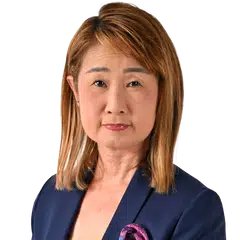
Newly elected Prime Minister Anutin Charnvirakul (centre) attends a voting session for a new prime minister at the Parliament in Bangkok on March 19.
PHOTO: REUTERS

- Thailand's new Prime Minister Anutin Charnvirakul is facing immediate pressure to address the energy crisis amid rising oil prices and economic concerns.
- Opposition MPs and the public are concerned about Anutin's ability to govern, citing corruption allegations and the need to manage oil supplies effectively.
- Analysts warn of potential economic fallout and political instability if the energy crisis isn't managed well, despite government assurances of sufficient oil reserves.
AI generated
BANGKOK – Newly elected Prime Minister Anutin Charnvirakul faces an immediate test in tackling Thailand’s energy crisis, as he takes office amid sluggish economic growth and rising turmoil in the Middle East that have sent oil prices soaring, said analysts.
Mr Anutin was confirmed as the country’s prime minister on March 19 after winning nearly 60 per cent of the votes in Parliament.
Analysts told The Straits Times that patience among ordinary Thais, as well as opposition parliamentarians, could wear thin if the country continues to face increasing economic pressures.
That was evident at the very start of the parliamentary sitting ahead of the vote.
Opposition MPs launched into an almost two-hour-long vigorous exchange with coalition government MPs over the ability and integrity of Mr Anutin to govern well and resolve the country’s crises.
Mr Natthaphong Ruengpanyawut, who leads Thailand’s biggest opposition People’s Party, raised several concerns.
They included corruption allegations involving Mr Anutin, reported irregularities over election vote-counting, border conflict with Cambodia and the energy crunch.
Dr Purawich Watanasukh, a political science lecturer at Thammasat University, told ST that there is unlikely to be any “honeymoon period” for the Anutin government.
“The oil crisis will serve as a crucial test for Anutin’s leadership, particularly as many Thais are currently facing economic hardship,” he said.
“If the government fails to adequately guarantee and manage oil supplies, it could trigger a broader economic crisis, undermining the party’s wider policy agenda.”
US-Israel attacks on Iran sparked a Strait of Hormuz blockade that has severely disrupted oil exports to many countries, including Thailand, which imports about half its crude oil from the region.
The Thai government has assured citizens that it has sufficient oil reserves to last some 100 days and that it also imports crude oil from diversified sources.
Officials have also been scrambling to introduce various measures, such as potentially buying oil from others like Russia, Brazil and Nigeria, capping fuel prices and preventing price gouging on consumer items like instant noodles and powdered milk for now.
Even before the Middle East conflict, the World Bank in February said Thailand’s economic growth could slow to 1.6 per cent in 2026, from 2.4 per cent in 2025, due to weaker global trade, high household debt and slower tourism recovery.
The Thai authorities are projecting an economic growth range of 1.5 per cent to 2.5 per cent, supported by continued expansion in private domestic consumption and investment, as well as a gradual recovery in the tourism and related sectors.
But if oil prices remain elevated in a protracted war situation, affecting other products like fertilisers and food, Dr Purawich said even a strong and stable parliamentary coalition “may not be sufficient to sustain the Anutin government in office amid growing public dissatisfaction”.
Mr Mathis Lohatepanont, a political science PhD candidate at the University of Michigan, said Mr Anutin “will have to make tough decisions about how much the government can continue to spend to support the Oil Fuel Fund, which is subsidising the price of energy, and what other measures the government can take to rein in these prices, manage inflationary pressures, and find alternative sources of energy”.
The Oil Fuel Fund Office currently faces a deficit of over 12 billion baht (S$468.2 million) that could deepen if the crisis continues.
Mr Mathis said he expects the opposition to pounce on highlighting any perceived failure of the Anutin administration’s energy measures thus far.
Securing majority vote
To no surprise, Mr Anutin, 59, won 293 votes to secure the premiership out of 499 seats in Parliament. There is one seat that has not been certified by the election commission.
This makes him the first prime minister to be re-elected in two decades; he became caretaker prime minister last September following the dismissal of his predecessor, Ms Paetongtarn Shinawatra.
Notably, it appears that one MP from the People’s Party broke ranks and voted for Mr Anutin.
Before the vote, Mr Anutin told the House that “every MP represents the Thai people equally”.
“I am ready to listen to all sides and, if elected, will work together to solve the country’s problems and deliver the results for the people,” he said.
Mr Anutin’s Bhumjaithai Party had secured a comfortable win in the Feb 8 general election, taking 191 seats out of 500 parliamentary seats.
Since then, he has made a pact with Pheu Thai Party – linked to former prime minister Thaksin Shinawatra – which came in third with 74 seats, along with other micro parties to form a coalition government.
Together, they comfortably occupy a total of 290 of 500 seats in the House.
Expectedly, the People’s Party, which has 120 seats, nominated its party leader, 38-year-old Natthaphong, as prime minister. But with just 119 votes, he failed to garner enough support.
Mr Natthaphong called on the citizens to not give up hope and assured them that his party, as the opposition, will continue to scrutinise the government and hold it accountable.
The other two dominant parties in the opposition camp are Kla Tham, or Dare to Do Good, Party, with 58 seats, and Democrat Party, Thailand’s oldest political party, with 21 seats.
Both were not approached by Mr Anutin to join the coalition.
While the two parties abstained from voting for either of the prime minister candidates, analysts said this is likely because they are trying to keep their options “open”, leaving room for future negotiation to join the coalition later on.
Opposition unity or lack thereof
Analysts told ST that the opposition – which consists of seven parties, including People’s Party, Democrats and Kla Tham, that together have 209 MPs – could remain “fragmented” and “unlikely to coordinate effectively enough to mount a meaningful challenge”.
“The size of the coalition majority means that even a united opposition would find it very difficult to actually prevent government Bills and the budget from passing,” said Mr Mathis.
Dr Purawich noted that the coalition may function smoothly at the outset, but the situation could shift once Thaksin is released from prison and “begins to influence Pheu Thai’s direction”.
Thaksin was sent to prison last September to make up for unlawfully avoiding jail after he was sentenced for corruption and abuse of power.
Beyond managing an energy crunch and economic fallout, Mr Anutin would also need to “balance patronage with policymaking”, said Dr Napon Jatusripitak, a visiting fellow at Singapore’s ISEAS – Yusof Ishak Institute.
“(He) must ensure that positions and (government) budgets are distributed in a way that satisfies key factions within his party and coalition, and beyond,” said Dr Napon, who is also managing director of Bangkok-based think-tank Thailand Future Institute.
“Historically, this has come at the expense of the effective allocation of resources and manpower, as well as policy coherence and delivery.”
Though Mr Anutin’s coalition government has a relatively strong majority in Parliament now, existing partners could pull out prematurely, potentially causing the administration to collapse, he added.
For now, the people’s trust in the abilities of the technocrats, whom Mr Anutin has promised to include in his upcoming Cabinet to implement practical solutions, is what is going for him.
But Dr Napon warned that if Mr Anutin ends up sacrificing his technocrat Cabinet line-up to satisfy his coalition partners’ interests, a “failure to deliver on the policy front would undermine both the credibility of his administration and the technocrats themselves”.
“This means Anutin’s administration must perform,” he added.
